
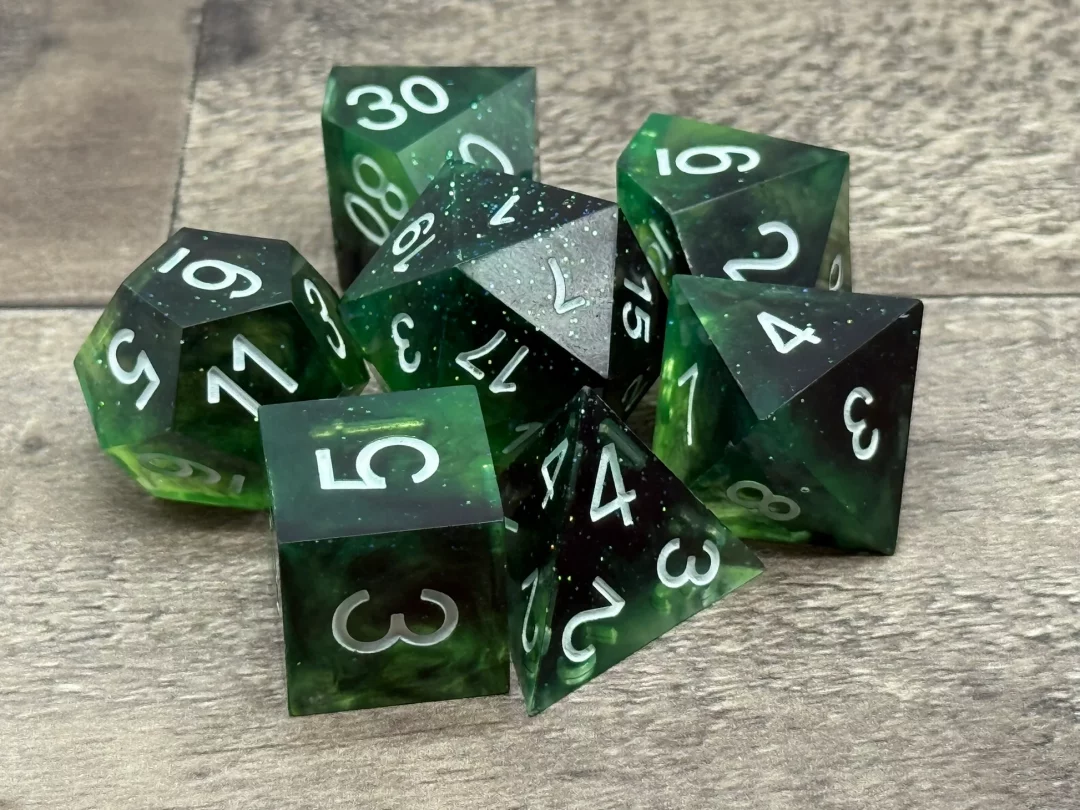
Recently I have been pondering tabletop roleplaying game mechanics, especially one simple question: When should one take an action? Well, that really depends on the game, frankly.
Crunchier games with lots of tactical rules tend to want players taking actions – usually rolling dice to determine whether or not they succeeded – quite a lot. Personally, I’m not much of a fan of that. When there is a question regarding what ancient group worshipped at some long-forgotten temple, games like “Dungeons & Dragons” might have the players make a History or Religion check, which for that game would be appropriate, I suppose. But I have to ask… Why?
Did that History or Religion check really matter? Why couldn’t a player simply ask the Dungeon Master who used that temple, and state that their History+Intelligence bonus should allow for them to simply know the answer via context clues (runes, symbols, scattered relics, etc)?
My point here is this: 99% of the time, a question like “What people used this ancient temple?” is simply for roleplaying purposes. The players don’t really need to know, it is simply flavor information, and usually has nothing more to do with the DM’s story at all. So if that’s the case, why do these systems ask players to make the check at all?
There are no consequences for this action, so it really is just a waste of time, and it is a poor TTRPG system that asks players to make such frivolous rolls. Yes, I just said the most popular TTRPG in America, and possibly the world, is a bad game with poor mechanics. Sue me.
Now a lot of DMs see these frivolous actions for what they are, and Homebrew in their own rules to skip over bothering with them. In this way, players know that if their DM asks them to make a roll, it is something that matters. While some feel that might spoil the mystery in a way, making players roll for every damn question they have makes it feel like their dice are the only thing that matters, that the game is completely up to chance with their skills just numbers on a page.
In short, rolling on everything is bad TTRPG design.
But there are plenty of TTRPGs that don’t ask you to roll for every action. Powered by the Apocalypse games (and their related works) are famous for only asking players to take an action when it is important to the story, and even if one fails, it moves the fiction forward. So in the question of what people used an ancient temple, there would be no Move needed. The Keeper/MC/GM/whatever would simply state that X player might find some clue to answer, if they had the best ability to do so, or that it was beyond the players’ ability to know, if they simply weren’t able to reasonably find those clues. But if it truly mattered to the fiction, said GM might ask the players if anyone could make a relevant Move, and go from there.
Regardless, the important part was keeping the fiction moving, without dragging the game down with unnecessary actions being asked for. I like that.
Personally, I like to restrain my calls for players to make an action only if it has consequences to the game. Combat scenes obviously apply here, unless the opponents the players face are merely a speed bump for them. Otherwise, if a situation arises that directly affects the adventure’s story, then I ask the players to take action. There must be consequences that could arise from a failed action, to make the players bother with taking said action.
That said, is there a potential use for asking for action rolls, to potentially mislead the players? Sure. I’m not saying game-masters shouldn’t do that, if they absolutely must, but I feel like there are better ways to accomplish this without asking for rolls that don’t matter. In fact, I would think GMs accomplish much more by rolling their own dice behind a GM Screen, than by asking players to make rolls for no reason but to confuse and mislead them. These secretive GM rolls serve to build mystery, making the players wonder what is going on, and builds tension.
… plus, it’s fun to roll your own dice. Soothing, even.
Anyway, I feel that GMs of all stripes should endeavor to do away with unnecessary dice rolls for their players. Leave the dice for when they truly matter, when Chance might really play a role in the story, rather than just to let the players exercise their various skills. They can do that simply by being allowed to succeed thanks to having a sufficient ability score, it is just as gratifying in the moment, and gives the same results.